
Dangerous Thoughts?
Grief Shows Us the Conceit of False Bravery

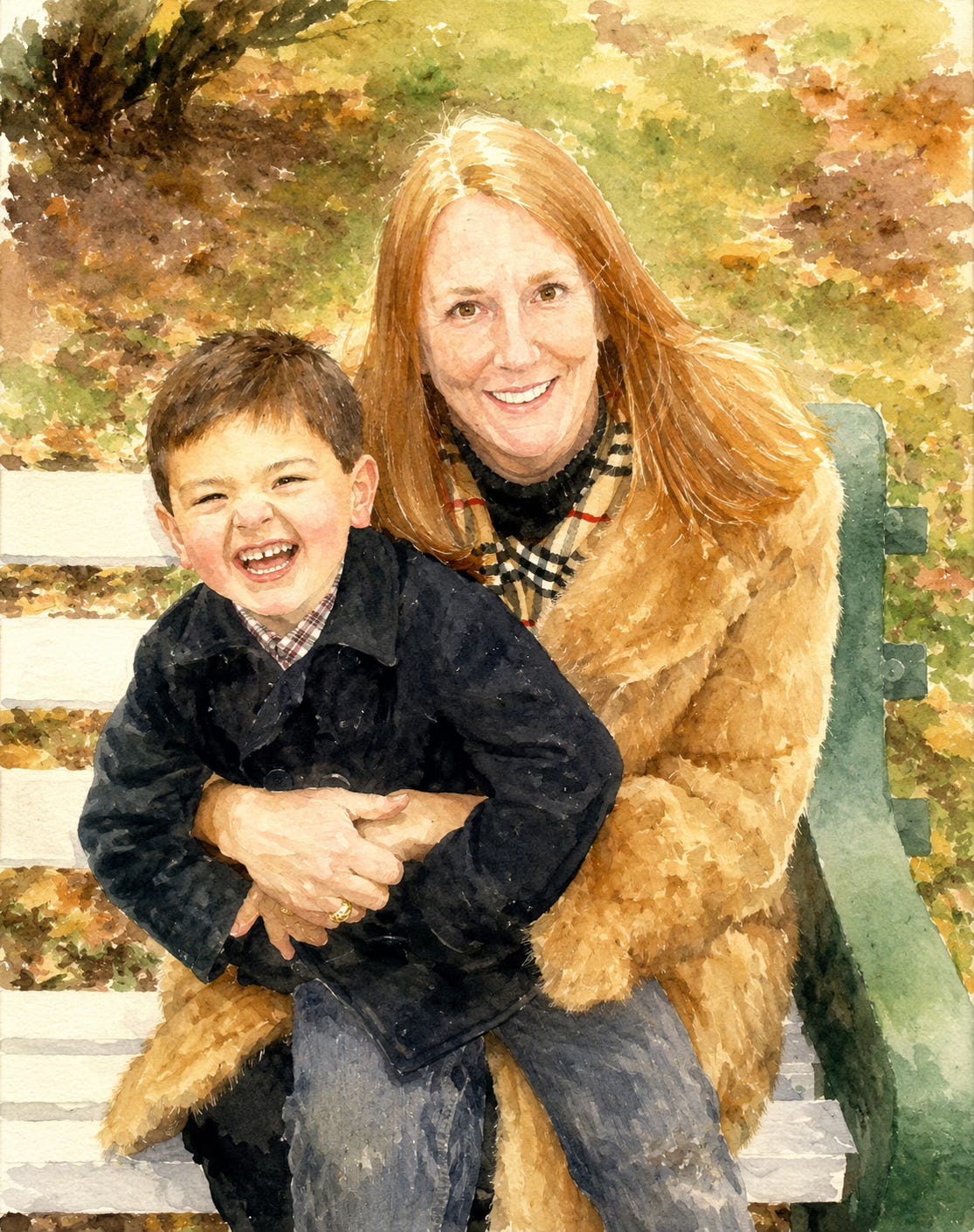
With Bix around 2011
I recently read a Mother’s Day essay by a writer I admire. She wrote about how painful Mother’s Day can be for many women: those whose mothers are dead (check!); women who are infertile (check!); grieving mothers (check!); women who have lost children (check!); and, of course, women who don’t like their mothers or whose mothers were awful (no checks from me on that one). The author said she was nervous to publish the piece because she feared backlash and hate mail for putting it in writing, but she published it anyway because, as she framed it, it was difficult and brave.
Come on.
I mean, it was a good essay. Compassionate. Thoughtful. True. I remember thinking: Mother’s Day is hard for grievers, but it’s also an overrated, commercialized holiday, and saying so isn’t dangerous or brave. It’s a truism.
My observation isn’t a criticism of her piece. It’s an assessment of our increasingly theatrical relationship to courage. There’s a difference between emotional vulnerability and real social risk. Grief cuts through the bullshit. I forgive the author because she hasn’t lost a child and has no clue what that’s like. She can only imagine losing a child in the most superficial and therefore artificial way, despite her talent as a writer and thinker.
Many things now presented as “dangerous truths” are, in fact, widely accepted forms of dissent. They may upset some people, but they remain morally cozy within the speaker’s cultural or social tribe. In literary, academic, grief, and therapeutic circles, as well as in both progressive and conservative circles, saying “Mother’s Day can be painful” does not lead to social or professional ostracism. It earns admiration for sensitivity and honesty. That was easy.
Actual dangerous speech is different because it threatens the sacred narratives people emotionally depend on. Not because the speaker is cruel, but because the idea itself destabilizes something culturally cherished. For example, suggesting that teachers are not inherently saintly.
This is where people become uncomfortable because the “hero teacher” trope serves an emotional function in society. We need teachers to be noble. The helping professions must feel morally pure, otherwise the systems we’ve built around them will come crashing down. Simplified categories of good and bad people are necessary because they help organize the chaos. I proved that point when I made my teacher’s comment in response to the Mother’s Day piece and was immediately attacked. I thanked the attacker for proving my point.
Placing entire professions or identities on a pedestal is dangerous. Sanctification discourages scrutiny. Once someone is cast as a “hero,” questioning their behavior becomes a social and professional risk.
This dynamic exists everywhere.
Mothers.
Therapists.
Spiritual leaders.
Gurus.
Activists.
Grief communities.
Religious institutions.
Families.
Every group or community has its sacred stories.
What fascinates me is that many people who publicly celebrate bravery are often deeply intolerant of genuinely destabilizing ideas. Many of us want the feeling of courage without the cost of dissent. They value the identity of being “truth tellers” far more than they value actual dissent. It’s bravery used for aesthetic purposes; rebellion as branding. They look for transgressions that have already been socially approved by their side.
People don’t generally reward certain truths because genuinely courageous speech often disappoints one’s own tribe by complicating the narrative, and in doing so, threatens its existence by removing certainty and resisting emotional simplification.
The real test of whether someone values free expression is not whether they defend speech they agree with. That’s easy. The test is whether they can tolerate ideas that threaten their worldview, status hierarchy, or moral identity. The final exam is whether they can consider ideas at odds with their beliefs, think them through, and change their minds. I have certainly done this. I have changed my mind about many things, including the Iraq War, 9/11 (I was there, just so you know), chemtrails, what constitutes genocide, and what counts as “self-defense.”
Grief sharpened my awareness of bravery and beliefs because catastrophic loss destroys one’s tolerance for wholesale acceptance of sentimental thinking, conventional wisdom, and popular opinion.
After your child dies, you notice how much of society runs on emotionally mandatory slogans:
“Everything happens for a reason.”
“Teachers are heroes.”
“Family is everything.”
“Good people help.”
“Mothers always know.”
The problem is not that these statements can be (and often are) false. The problem is that they are treated as morally compulsory. Sacred narratives are fascinating because they are often tied to professions or identities that people need to keep uncomplicated. Teachers. Nurses. Mothers. Therapists. Rescue workers. Even “grief communities.” Once a group is sanctified, nuance becomes threatening. The minute you say:
Some teachers are cruel or bad at their jobs
Some mothers damage their children,
Some grief spaces become performative and competitive,
Some helping professions attract narcissists,
Some “safe” communities punish dissent,
People hear not a critique of systems or human behavior, but an attack on goodness itself. That is where social danger begins.
· loss of belonging,
moral suspicion,
whisper campaigns,
professional consequences,
being recast as “unsafe,”
being interpreted in the least charitable way possible.
The interesting thing is that grief can make misrepresentations evident. Once you know the truth about the pain of devastating loss, your bullshit meter becomes stronger. You notice how much of society runs on slogans people are afraid to interrogate. Grief renders Hallmark language unbearable. You recoil from phrases that flatten reality into something tidy and marketable. Beloved slogans exist not because they are true, but because they are reassuring. It’s like people asking me, “Was Bix wearing a seatbelt when he died?” as a way of convincing themselves their kid wouldn’t die because he would be wearing one. Tell yourself whatever you want. Trust me, I hope it doesn’t happen, but your kid could die with or without a seatbelt. The knowledge that Bix was wearing a seatbelt isn’t going to save you, just as “teachers are special” isn’t going to save you from a lousy, abusive, or emotionally crushing teacher.
There’s also something deeply performative about announcing one’s bravery before saying something relatively acceptable. Almost a preemptive sanctification:
“I know I’ll get hate for this…”
“This is scary to say…”
“I may lose followers…”
“I almost didn’t publish this…”
Such preambles serve as a kind of moral stage lighting. It frames the speaker as courageous before the audience has had a chance to read and evaluate her idea. Meanwhile, truly risky observations are often made quietly, cautiously, or anonymously because those who make them understand the real cost.
Actual courage is lonelier than that and can often mean:
disappointing your own side,
resisting ideological pressure from people you like,
refusing simplified narratives,
saying “this is more complicated than we admit,”
tolerating misunderstanding,
losing applause.
After catastrophic loss, many people become less interested in appearing virtuous and more interested in what is true, which can be socially inconvenient. The social game itself can start to look strange and fragile, like people performing certainty to ward off existential terror.
That’s why people who celebrate “hard conversations” sometimes become punitive the moment the conversation no longer flatters their assumptions.
The courage to keep participating in life while carrying an unbearable reality that others are uncomfortable with is extraordinarily hard. Grieving parents quickly realize something almost no one says aloud: over time, your grief becomes socially destabilizing. Not because people are mean or don’t care, but because your presence reminds them of vulnerability, randomness, death, helplessness, and the limits of control. You become living evidence that catastrophe can, does, and will enter an ordinary life without permission. Promise.
People can love you deeply yet still fear being near your grief. Living “out loud” in grief, as you define it, is not collapsing publicly at every gathering. It is refusing to pretend your child never existed just to make others comfortable. It’s understanding that not every room can hold your grief at full volume all the time. That distinction matters enormously because there is a difference between authenticity and emotional colonization.
You learn discernment about when to:
speak
stay quiet
leave
comfort others,
let yourself be held
protect your own nervous system
not to demand that every social interaction become grief-centered
There is courage in making those choices, especially in remaining socially generous after enduring immense loss. Many people assume grieving parents either become permanently fragile or self-focused. Some of us grievers become extraordinarily attentive to others because we know suffering from the inside. We become careful with our rooms, energy, and emotional bandwidth, recognizing that everyone is carrying something.
Some of the bravest grief is nearly invisible, including:
showing up anyway,
tolerating discomfort,
letting others have joy,
not punishing people for surviving,
allowing conversations that are not about your loss,
staying connected to humanity even after humanity disappointed you.
That is not repression or spiritual bypass. It is maturity, discernment, and love, whether because of or despite your sadness.
Perhaps one of the hardest truths: Grief costs relationships. One of the loneliest parts of grief is realizing that your pain frightens some of those who love you in part because grief alters your tolerance for superficiality, sentimentality, and emotional dishonesty. We call out the bullshit instead of pretending. Some relationships simply cannot survive the person you become after a catastrophic loss.
Courage in grief means staying gentle after understanding how uncomfortable your presence has become for others. There is tremendous bravery in continuing to participate in life after life has shattered you. That’s why I have grown suspicious of loud declarations of bravery. Sometimes the bravest thing a grieving person does is not to speak at all; it is simply to remain soft in a world that claims bravery where none exists.
This was profoundly instructive and powerful. Thank you Karen.
Some of the bravest grief is nearly invisible, including:
showing up anyway,
tolerating discomfort,
letting others have joy,
not punishing people for surviving,
allowing conversations that are not about your loss,
staying connected to humanity even after humanity disappointed you. What a great list. Thanks for sharing.